
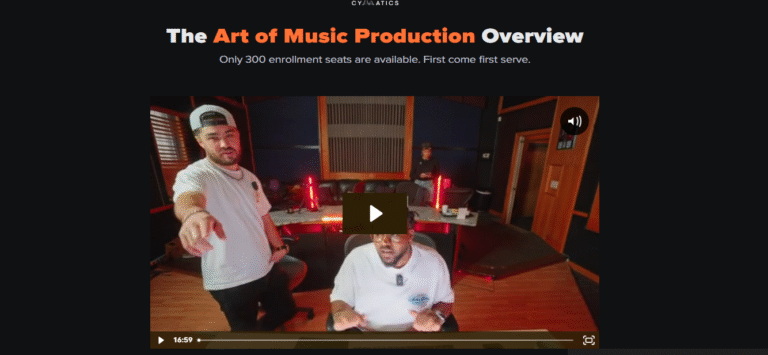
Cymatics – The Art of Music Production
$697.00 Original price was: $697.00.$52.00Current price is: $52.00.

Cymatics – The Art of Music Production: A Deep Dive Into The Science, Creativity, and Craft Behind Modern Sound
Music production has evolved into one of the most powerful creative disciplines of the modern era, blending technology, artistry, and scientific understanding into a single expressive craft. Today’s producers combine intuitive musicality with data-driven processes, innovative sound-creation tools, and an ever-expanding range of techniques to carve out unique sonic identities. Among the many concepts shaping the modern landscape of creation, Cymatics – The Art of Music Production stands out as a philosophy that brings together the relationship between sound, emotion, and structure. Instead of focusing exclusively on equipment or software, this approach encourages creators to understand how sound behaves, how it influences listeners, and how it can be designed with intention and precision.
This long-form guide explores the deeper layers of music creation, from the physics of audio waves to advanced production workflows, creative psychology, composition frameworks, and mixing philosophies. Whether producing electronic tracks, cinematic pieces, ambient soundscapes, hip-hop beats, or acoustic performances, the principles highlighted here can elevate the quality and emotional impact of your work.
Understanding Sound: The Foundation of Modern Production
Most producers jump into music without examining the nature of sound itself. However, knowing how vibrations translate into emotional experiences gives creators a strategic advantage. Every tone, frequency, harmonic layer, and modulation shape how listeners interact with a composition. When a producer understands how certain frequencies evoke calmness, power, intensity, nostalgia, or tension, they can design sound with far more intention.
Frequency and Tonal Energy
Sound is a pattern of pressure changes. Different frequencies carry different emotional signatures.
Low frequencies often create power, warmth, and grounding.
Mid frequencies carry clarity, presence, and detail.
High frequencies contribute air, sheen, and sparkle.
Knowing how these ranges interact enables producers to sculpt energy throughout a track, guiding listeners through tension and release.
Harmonics and Texture
Every sound contains multiple layers called harmonics, which define tone quality. Adding or subtracting harmonics through saturation, filtering, and modulation shapes the overall texture. This is where creativity merges with physics, allowing producers to design distinctive timbres.
The Rise of Digital Creation and the Modern Producer
The shift from analog hardware to digital workstations opened up opportunities for creators worldwide. Today, anyone can build high-quality music with a laptop, a DAW, and a few essential tools. However, the best producers stand out not because of equipment, but because they master concepts like structure, dynamic flow, emotional storytelling, and intentional sound shaping.
The Modern Producer Skillset
A high-level creator blends multiple roles:
Composer
Sound designer
Arranger
Recording engineer
Mixer
Creative director
Storyteller
Mastering each component allows the producer to communicate ideas with clarity and precision.
Creative Process and Idea Development
Every song begins as a seed—sometimes a rhythm, sometimes a melody, sometimes an emotion. Strengthening the early stages of idea development helps producers build more impactful compositions.
Building Musical Concepts
One of the most reliable ways to start is by identifying the emotional theme. For example, deciding whether the track should feel uplifting, nostalgic, aggressive, peaceful, or epic creates a direction for the choice of tempo, sound palette, and arrangement.
Using Sound to Shape Emotion
Different production decisions influence emotional tone:
Reverb creates space, distance, or mystique.
Compression adds punch, control, or intensity.
Delay can generate movement or suspense.
Modulation enhances mood, texture, and depth.
When used intentionally, these tools turn raw elements into polished, expressive art.
Composition: Structure and Flow
A well-structured track keeps listeners engaged from the first second to the last. This involves more than placing elements randomly; it requires understanding momentum, contrast, and pacing.
Intro: Capturing Attention
Great producers design intros that immediately set the mood. This may include atmospheric pads, rhythmic patterns, or unique textures that introduce the main theme in subtle ways.
Build-Up: Creating Anticipation
Tension is essential in music. Adding layers, adjusting filter cutoff, increasing rhythmic complexity, and raising volume gradually all help to build energy.
Drop or Climax: Delivering Peak Emotion
The drop represents the moment of release. Whether it is a heavy bass section, a soaring chorus, or a lush instrumental peak, this part carries the full weight of the track’s message.
Breakdown: Resetting the Atmosphere
After a climactic section, removing elements or softening intensity gives listeners a chance to breathe, making the following sections more impactful.
Sound Design: Crafting Unique Sonic Signatures
Sound design is one of the most transformative skills a producer can learn. Instead of relying on presets, creators develop their own textures, instruments, and sonic identities.
Synthesis Techniques
Synthesis can shape everything from basslines to pads, plucks, effects, and leads. The main synthesis types include:
Subtractive
FM
Wavetable
Granular
Additive
Each method provides unique tonal capabilities and creative pathways.
Sampling and Audio Manipulation
Sampling allows producers to reshape real-world sounds into entirely new instruments. Reversing, stretching, layering, and pitching samples can lead to inventive textures and rhythms that define a track’s character.
Mixing: Achieving Balance, Clarity, and Impact
Mixing transforms raw ingredients into a cohesive and powerful final piece. Even the best compositions fall flat without proper balance.
Clarity Through Frequency Control
Using EQ to carve space ensures each element sits naturally in the mix. Overlapping frequencies can cause muddiness, but careful sculpting creates better separation.
Dynamic Shaping
Compression, transient shaping, and volume automation establish movement and presence. Tracks feel alive when dynamics are controlled without being overly flattened.
Spatial Design
Reverb and delay placement define depth. A professional mix positions each layer in its own space, giving listeners a three-dimensional experience.
Mastering: Polishing for Professional Release
Mastering involves preparing the track for final distribution. It enhances loudness, ensures clarity across devices, and standardizes spectral balance. A great master translates well on headphones, speakers, cars, and streaming platforms.
Mastering Priorities
Tonal balance
Stereo enhancement
Controlled loudness
Clean limiting
Platform-optimized gain levels
Mastering is the stage where a track becomes sonically competitive.
The Psychology of Great Production
Music triggers emotional responses because of cognitive associations, memory activation, and physiological reactions. Skilled producers design transitions, melodies, rhythms, and textures to guide listeners through emotional narratives.
Why Certain Sounds Move People
Minor keys evoke sadness or tension.
Major keys feel bright or uplifting.
Slow tempos create calmness.
Fast tempos generate excitement.
Understanding these reactions helps producers tell powerful stories.
Adapting to Evolving Technology
Production is constantly advancing. AI-powered tools, new synthesis engines, virtual instruments, spatial audio, and immersive formats are shaping the next generation of music creation. Staying updated helps producers remain competitive and innovative.
Final Thoughts
Mastering the art of music production requires a combination of scientific understanding, creative exploration, technical expertise, and emotional sensitivity. When producers approach creation intentionally and understand how sound interacts with human experience, they unlock the ability to build tracks that resonate deeply with listeners. By learning how frequencies shape emotions, how structure maintains engagement, and how sound design forms identity, creators can elevate their craft to new heights. The journey never ends, because production is a lifelong pursuit of improvement, discovery, and artistic expression.