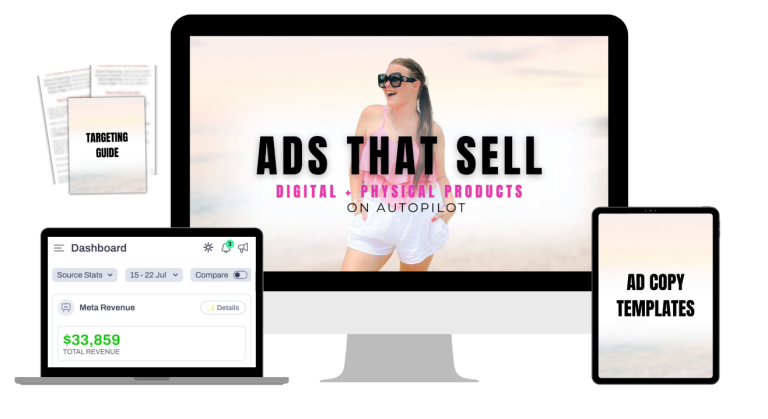
Katie & Floyd – Ads That Sell Digital Products+$3k Cash Days
$344.00 Original price was: $344.00.$47.00Current price is: $47.00.

Introduction: The Rise of Digital Product Sellers
The growth of digital products has transformed thousands of creators into business owners who earn consistent revenue without inventory or physical limitations. As more individuals shift toward selling templates, courses, guides, and automated tools, the challenge now lies in reaching the right customers and standing out in an increasingly competitive digital marketplace. The system developed by Katie and Floyd has gained attention because it focuses on combining paid advertising, strategic funnel building, and psychological triggers to create days where revenue spikes beyond $3,000, even for small creators with limited experience.
Their approach offers clarity for beginners while still providing advanced insights for creators ready to scale. Instead of relying solely on organic reach, they emphasize predictable traffic, data-driven optimization, and efficient delivery systems. These components create a sustainable cycle where every sale becomes a stepping stone to faster growth.
Understanding the Foundation of Their Strategy
At the core of their method is the belief that digital products need a structured environment designed to convert cold audiences into buyers. Many creators make the mistake of launching a product without a framework, hoping that a single viral post will carry the business. This approach often fails, not because the product is poor, but because the customer journey has not been designed properly.
Katie and Floyd prioritize three major pillars: targeted advertising, high-converting landing pages, and automated follow-up systems. Each segment is essential because it contributes to the overall velocity of sales. With these pillars aligned correctly, even small ad budgets can produce powerful results.
Why Paid Ads Work So Well for Digital Products
Creators often fear running ads because they assume that paid marketing requires large budgets. In reality, digital products are uniquely suited for advertising because they offer significant profit margins, fast delivery, and near-zero fulfillment costs. Every dollar spent on traffic becomes an investment in data, and the customer insights generated from ads help creators refine their messaging, pricing, and audience targeting.
Ads also allow digital creators to bypass slow organic audience building. With effective targeting, a new seller can reach thousands of potential customers who already have buying intent. This approach shortens the time required to validate an idea and generates momentum faster than traditional content strategies.
Crafting the Perfect Digital Product Offer
A successful ad campaign requires a compelling offer. Katie and Floyd emphasize the importance of shaping a product that solves a specific problem and communicates its value instantly. Instead of presenting a long list of features, the offer must speak directly to the transformation or result the customer desires.
The best offers follow these principles:
1. Clarity Over Complexity
Customers must understand the purpose of the product within seconds. If the messaging is vague, even the strongest ads will fail to convert.
2. Proof of Value
Demonstrating the product’s effectiveness through testimonials, examples, or previews increases trust and encourages faster decision making.
3. Seamless Delivery
The customer experience after purchase should be smooth and immediate. Instant access, easy downloads, and well-organized content reduce friction and increase satisfaction.
Building High-Converting Landing Pages
Even the strongest ad creatives will struggle if the landing page fails to persuade visitors. A strong landing page follows a psychological flow that guides the visitor’s attention and encourages them to take action.
Attention-Grabbing Headline
The headline should immediately communicate the core benefit of the digital product. Customers should feel compelled to continue reading.
Emotional and Logical Appeal
The page must address both the emotional desire for transformation and the logical reasoning that validates the purchase. Combining these elements strengthens conversion rates because customers buy with emotion and justify with logic.
Simple Navigation and Clean Design
Clutter distracts. A minimalist layout with clear sections ensures the visitor focuses on the key points without feeling overwhelmed.
Clear Call-to-Action Buttons
Buttons should be placed strategically throughout the page. They must be noticeable, direct, and aligned with the customer’s next step.
The Power of Ad Creative That Converts
Ad creative is the first impression a potential buyer has of the offer. Katie and Floyd emphasize that creative does not need to be complicated. In fact, simple visuals and straightforward messaging often outperform overly polished designs.
Use of Pattern Interrupts
Ads need to stop scrolling and grab attention instantly. Bright colors, bold statements, or pointed questions can prompt viewers to pause.
Clear Value Proposition
The viewer should understand exactly what is being offered within the first few seconds. If the message is unclear, conversion rates will drop.
Social Proof Elements
Screenshots, testimonials, or metrics that demonstrate success enhance credibility. Social proof helps overcome hesitation and strengthens trust.
Structuring Ads for Optimal Results
Once the creative is ready, the structure of the campaign determines how well the ads perform over time. Successful campaigns follow a testing methodology where multiple audiences and creative variations are evaluated. This process reveals which combinations produce the highest returns.
Targeted Audiences
Instead of broad categories, audiences should be narrowed based on behavior, interests, and purchase intent. The more aligned the audience, the lower the cost per conversion.
A/B Testing Creative Variations
Running different versions of an ad helps identify which visuals and messages resonate most effectively. Testing prevents wasted budget and improves overall performance.
Scaling Winning Ads
Once a winning ad is identified, the budget can be increased gradually. This controlled scaling preserves profitability while increasing the number of conversions.
Email Automation and Follow-Up Systems
Many creators focus solely on making the initial sale, but long-term revenue depends on nurturing relationships. Email automation helps convert leads who may not buy immediately. Instead of losing potential customers, automated workflows guide them through the journey until they are ready to purchase.
Lead Magnets That Attract Quality Subscribers
Offering a free resource helps capture emails from individuals who have real interest in the topic. Quality leads convert more efficiently in future campaigns.
Educational Email Sequences
Customers need time to understand the value of a product. Educational sequences provide insights, examples, and explanations that build trust and credibility.
Promotional Offers and Upsells
Once a subscriber understands the value of the initial product, they may be ready for additional offerings. Upsells provide opportunities to maximize revenue without increasing ad spend.
Achieving Consistent $3k Cash Days
The strategy developed by Katie and Floyd is not about overnight success; it is about creating a system that consistently produces revenue spikes through predictable traffic and optimized funnels. When ads draw in qualified buyers, landing pages convert them effectively, and email sequences nurture long-term relationships, daily revenue naturally increases.
Consistency matters more than speed. The creators who maintain a steady routine of testing, refining, and scaling eventually reach the point where $3,000 days become achievable and repeatable. Once this level is reached, the business gains stability, and future growth becomes much more accessible.
The Long-Term Value of This System
The strength of this system lies in its adaptability. Regardless of the type of digital product—courses, templates, ebooks, guides, or toolkits—the same principles apply. The strategy evolves with new platforms, ad policies, and customer behavior, yet the core remains the same: attract, convert, and retain.
Creators who adopt these methods gain more control over their income and develop skills that remain valuable across multiple niches. With time, these principles become second nature, and every new product launch benefits from the foundation already built.
Conclusion
The landscape of digital product sales continues to expand, but success requires structured systems and strategic thinking. The approach developed by Katie and Floyd demonstrates how creators can rely on data-driven advertising, optimized funnels, and automated follow-ups to achieve reliable sales and impressive cash days. By mastering these elements, anyone can build a digital business capable of scaling far beyond initial expectations.